


 PL
 EN
 UK
 DE


News
Chemical Works: there is a plan to clean up the site and the waterways

A plan to decontaminate the site of the former Chemical Works so that it is safe for the health and lives of local residents was presented today at a conference at the Palace in Rybna. “For 20 years we have been fighting for this site, which meant fighting for funding. Today we have assurances that the funds will be provided,” said Mayor Arkadiusz Czech at the conference.
Since last year, the company Remea, with the support of a group of experts from the Polish Geological Institute – National Research Institute, has been investigating the site of the former Chemical Works in Tarnowskie Góry, taking numerous soil and water samples. In March, their representatives discussed the results and conclusions from the work carried out so far. On this basis, the environmental improvement programme presented today was drawn up, which recommends what to do with the waste, how to remediate and reclaim the environment so that it is safe, and how to return it to the residents.
The first ‘eco-bomb’ town to have an environmental improvement plan
– For many years, both before and after the war, waste in this area was dumped directly onto the ground without any protective measures. A significant proportion of these toxic substances was secured in sarcophagi at the turn of the 20th and 21st centuries. But much still remains to be secured. We will place a further 400,000 tonnes of waste into the sarcophagus. We also intend to pump out the groundwater to treat it. On Friday, at the General Prosecutor’s Office in Warsaw, we discussed the details of an agreement under which the city will take over this site. This is necessary in order to apply for funding and carry out remediation work on the site,’ said Mayor Arkadiusz Czech today.
– This long-standing environmental problem requires responsible cooperation between many institutions. We have been working with the mayor for years. We see the possibility of reaching an agreement. “The aim is for the town of Tarnowskie Góry to obtain legal title to the site,” continued County Governor Adam Chmiel, picking up on the mayor’s remarks.
In a letter to conference participants, Anita Sowińska, Deputy Minister for Climate and the Environment, offered her congratulations: “As the first town covered by the Act on Large-Scale Degraded Areas, you have succeeded in completing this task [to draw up an environmental remediation plan]. (…) The projects carried out, funded from the National Recovery Plan (KPO), will form the basis for applying for further funding for investment measures – the implementation of measures arising from the remediation plans using European Union funds,” wrote the Minister.
“Personally, I hope that you, Mr Mayor, will manage to complete this task [the disposal of hazardous waste from ZCh] before the end of the current local government term,” wrote MP Tomasz Głogowski.
What else remains to be cleaned up?
Katarzyna Starzec, works coordinator and microbiologist at Remei, pointed out that the former ZCh site covers approximately 70 hectares, the vast majority of which has been decontaminated, with the toxic substances placed in sarcophagi. However – according to estimates – there are still 1.5 million cubic metres of contaminated soil remaining, and certain water bodies also need to be secured and cleaned up.
Justyna Molska, a microbiologist at Remei, discussed, amongst other things, the results of environmental tests (samples were taken to a depth of 1 metre and from beneath the waste; not all were highly toxic) as well as the risks to health and the environment.
How can the site be restored to its full potential?
Remediation – that is, restoring the site to its full potential – will begin with clearing the site to ensure that work carried out there is safe. This will involve, amongst other things, the demolition of remaining infrastructure, the clearance of the remaining construction and municipal waste, the construction of access roads, and the relocation of underground utilities and gas pipelines from the waste layers to the soil.
Subsequently, in the largest area encompassing the source of contamination (over 50 ha), the following will be installed, amongst other things: a 3.5 km-long anti-filtration barrier extending to a depth of up to 17 m, reactive gates (filters in which the water is treated; the area will be covered at the surface), and a new above-ground treatment plant (pumping and treatment)
– “We also have a small area where there are harmful organic compounds. The waste from there will be contained within a sarcophagus,” said Katarzyna Starzec.
At Stole, on the other hand, trees will be used (for soil stabilisation and partial capture of contaminants), and the remediation will be supported by chemical agents. In the forests, on the other hand – due to the low level of contamination – the soil layer will be covered with a layer of clean humus.
All this work, according to the team preparing the environmental remediation programme for the former ZCh site, is intended to clean up and secure the site so that it is safe for residents and users. The site will be monitored for the next 20 years.
Scientists involved in investigating and planning the remediation of the former ZCh site also recommend monitoring water bodies outside this area.
Next steps
In the coming months: submitting an application for an environmental permit to the district administrator; seeking funding for waste removal; and, once funding has been secured, launching tenders for site clean-up, waste removal and remediation.
In the coming years: “Our aim is to return the land to the residents and the town and to achieve the full environmental benefit for present and future generations,” said Mayor Arkadiusz Czech.
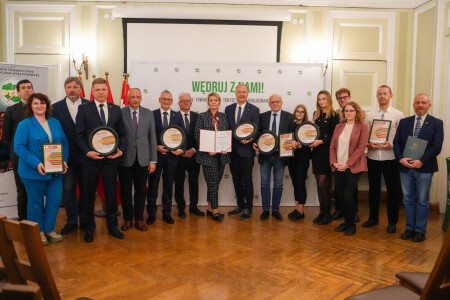
Zakłady Chemiczne: conference presenting the results of the site survey
Photos
Other news
-
-
Tarnowskie Góry is to get an outdoor swimming pool!
-

Stare Tarnowice: join us in sowing a wildflower meadow!
-

3rd Tarnowskie Góry Halloween Get-together
-

On 2 November, the Town Hall will be closed
-

The St Barbara Mystery Play has delighted audiences for the fourth time
-
The 2026/27 Silesian Running League has kicked off!
-
The Silesian Swimming Association celebrated its anniversary in the Town of Miners
-

The area around Bytomska and Piestraka Streets – local development plan
-
We’ve pulled it off! Tarnowskie Góry – a Cyclist-Friendly Municipality
-

🎃👻 HALLOWEEN AT THE KLIF CLIMBING WALL! 🧗♀️
-

The 4th St Barbara’s Mystery Play